
How Dust Builds Up So Quickly in Modern Homes
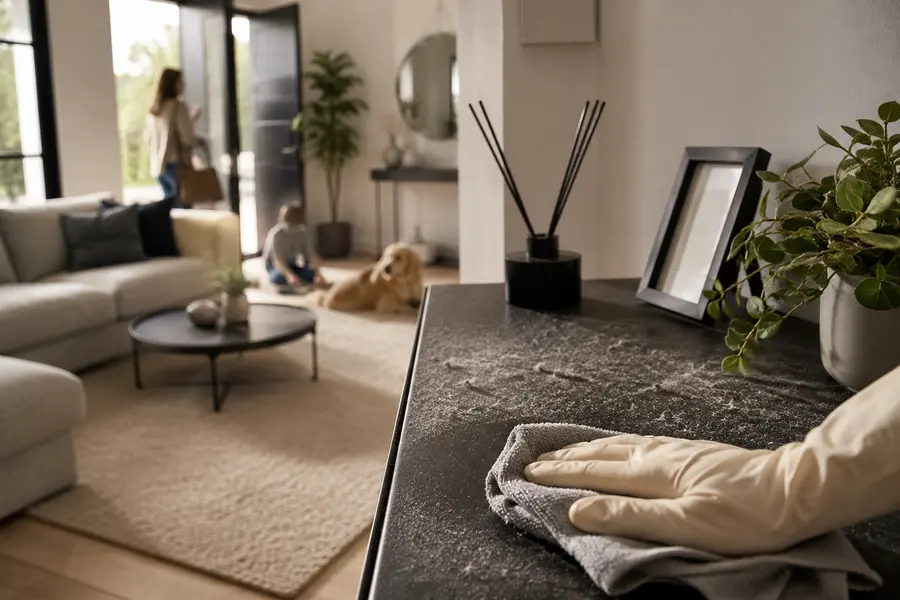
Dust Builds Up Fast in Modern Homes: Causes & Solutions
Dust seems to appear immediately after cleaning. You have vacuumed the floor and dusted the furniture but now there is a film of dust on the shelves, the tables, the windows. It’s common in a lot of Australian homes and it makes even the cleanest home look dirty no matter how many times you mop your floors. If you’re interested in keeping your living conditions cleaner, longer, the first thing you need to understand is how dust accumulates in your home. Dust is dirt, certainly, but it’s dirt that. Dust consists of minute particles that are generated both inside your home and from outside such as dead skin cells, fibers from your clothing and textiles around the home, pollen, pet dander, soil, and even tiny fragments of your own pet’s hair. While modern homes are far more energy-efficient and comfortable to live in, they can also provide an ideal environment for dust to build up more quickly than many people realise.
This guide tells you why you have more problems with dust in your home, where dust hides, and what you can do about it to keep your home dust-free.
Why Dust Forms Fast
It is generally thought that dust enters the house via windows and doors but actually most of the dust found in your home comes from inside your own home. People continually shed small skin cells, clothes release fibres, paper items get worn down, and over time even carpets slowly get eroded. Besides these, cooking , burning of candles, and fireplaces are among the sources of fine particle generation. Most modern houses are built with a focus on energy-saving and because of this have very little air exchange between inside and outside.
Although it is good for keeping a house comfortable, at the same time it causes dust particles to float in the air. Instead of settling down naturally and disappearing, they keep circulating within the house and settle on surfaces such as furniture and floors and also in the air. Since these particles are continuously generated, dust accumulates in homes at a faster rate than most homeowners anticipate.
Everyday Sources Of Dust
Many of our daily activities impact the dust situation at home without us noticing. Walking on the house shoes out of soil, sand and small particles from outdoor on shoes. Most households have an abundance of pets which create an enormous amount of dust by shedding fur, dander and dried mud from their coats but they also lend to the amount of dust found within your home through their use of soft furnishings such as carpets, rugs and upholstered furniture. Your bed is dustier than any other area of your home because it holds onto skin cells, clothing fiber and dust mites. Even books, cardboard boxes and houseplants release tiny dust particles as they mature or desiccate. The result of all these sources is that fresh dust is generated on a daily basis, even in homes that are kept clean.
Hidden Dust Collection Areas
The primary reason is that there are certain parts of our homes that get dustier at a faster rate than other areas due to the lack of regular maintenance. Ceiling fans also continuously collect and retain airborne dust particles. It is not only the ceiling fans that contribute to the accumulation of dust. The air conditioning vents also collect dust and this dust gets spread around the house when the system is turned on. Without one’s knowledge, the dust can lie for months underneath televisions, behind refrigerators, washing machines and other big household appliances. Dressing up beds, hiding sofas, putting things in wardrobes and along skirting boards are the places where the dust should get accumulated and the dirt gradually builds up over time. Cleaning is typically conducted in a too-regular fashion only on sites that are visible and these niches are allowed to serve as long-term dust reservoirs.
| Common Dust Hotspots | Why Dust Collects There |
| Ceiling fans | Air movement attracts fine particles |
| Air conditioning vents | Dust gathers inside filters and vents |
| Behind furniture | Limited airflow and infrequent cleaning |
| Under beds | Rarely disturbed during daily cleaning |
| Curtains and blinds | Fabric traps airborne particles |
| Skirting boards | Dust settles along edges of rooms |
Modern Homes Trap Dust
Today’s houses have been designed with extra insulation, double glazed windows and enhanced sealing around doors and windows. Even if these traits are helpful in minimizing energy expenses, they usually limit natural ventilation. In the instances when fresh air is prevented from circulating, airborne dust remains indoors in a suspended state for a longer time. Besides heating and cooling systems, these particles keep getting disturbed as the air is being circulated in the house and they are allowed to fall on different surfaces multiple times.
Open-plan living has also had an impact on how dust moves. It is somewhat easier to visually spot the dust in the light in the living room on a sunny day or near a window. But the bedroom is usually dark and dust in the bedroom doesn’t seem to be much of an issue because we don’t usually see it around. When windows are kept closed in the bedroom, not many external particles get in compared to living rooms which can get messed up with dust anytime as there is constant coming and going through the door and window opening.
Health Effects Of Dust

Dust is often considered just a cosmetic matter. Dirt accumulation can also lead to poor air quality indoors. The accumulation of small particles can cause irritation of the eyes, nose and throat. Those who suffer from allergies or asthma will be impacted the most by dirt due to their more sensitive respiratory systems. Basically, dust mites will live and reproduce in beds, carpets and soft furniture where there is higher accumulation especially when it is warm or humid. Besides dust mites, pet dander pollen mold spores and a whole set of other tiny particulates that are present in household dust are the usual suspects behind allergy attacks. Other microscopic particles contained in household dust are also frequent triggers of allergies. Plus reducing these particles, a consistent cleaning regimen will assist in maintaining the indoor environment fresh and healthy for everyone in the house.
Simple Ways To Reduce Dust
The prevention of dust problems in the home begins with regular, good cleaning practices and not with infrequent, intensive cleaning. Vacuuming carpets with a good vacuum cleaner that has a high efficiency particulate air or an equivalent filter is a great way to clean the carpets. This filter traps the fine particles before they can become airborne again. It is necessary to mop hard floors regularly because sweeping may just move the dust around the room. Using damp microfibre cloths instead of dry dusters helps in trapping the particles and prevents the dispersal of particles around the room.
Laundry bedding weekly, washing curtains regularly and changing air-conditioning filters result in reducing the amount of dust on the indoor air. Shoes off at the entrance will keep germs from entering your home. Brushing pets outdoors eliminates the amount of hair and dander that can collect in your home. Daily habits are generally a more efficient way of removing dirt than a large, deep clean every few weeks.
| Dust Reduction Habit | Main Benefit |
| Vacuum regularly | Removes fine dust from carpets and rugs |
| Mop hard floors | Prevents dust from becoming airborne |
| Wash bedding weekly | Reduces dust mites and allergens |
| Clean air filters | Improves indoor air circulation |
| Dust with microfibre cloths | Captures particles instead of spreading them |
| Remove shoes indoors | Limits outdoor dirt entering the home |
When Professional Cleaning Helps
With a little dusting and mopping, dust bunnies can be defeated but some dust remains concealed in carpets and furniture, inside air vents and in places that don’t see much light. Cleaning companies have specialised equipment that can extract embedded dust far more effectively than any household cleaning tools. Investing in professional rug and carpet care also helps remove deeply embedded dust, allergens, and fine particles that regular household cleaning often cannot reach.
Deep carpet cleaning, sofa cleaning, vent cleaning or even an elaborate spring clean can go a long way in preventing dust build-up in the home. It’s a no-brainer that you should consider hiring a professional cleaning service if you have a pet taking care of a child, have allergies or reside in an area that’s a construction zone, because the dust levels are that much higher. Routine deep cleaning also helps prolong the life of your carpet, furniture and your floors, by removing any sandpaper type of dust that will eventually wear out these items.
Build Better Cleaning Habits
There’s really no substitute for staying on top of dust on a regular basis rather than waiting for it to become visible. Dividing cleaning tasks into manageable weekly jobs much lightens the work. The residue of dust that arises from a surface wipe, dusting of the cushions, vacuuming of the floor surfaces most used, cleaning of filters, and performing one deep-soil cleaning each month are all sources of dust build-up in those tiny, hard-to-reach places. Households that make cleaning part of their regular tasks often experience less of a problem with the need for a thorough dusting in the future since they manage to take care of the particles even before they have a chance to accumulate. Just a bit of upkeep every week will save you from the necessity of unendingly cleaning over a period of several months.
Conclusion
Dust is a reality of life, but understanding the reasons dust buildup in homes so rapidly can make it a little more manageable. Today’s building practices, indoor lifestyles, cushions, pets and the like, plus the tight seals on windows and doors that prevent air exchange, mean many homes in Australia are battling dust problems on an ongoing basis. The good news is that by regularly cleaning, ventilating better, keeping up with your systems, and even having a professional deep clean once in a while, you can really reduce dust levels.
When you clean not only the visible surfaces but also the hidden spots that collect dust, you can keep your home cleaner, healthier, and more comfortable throughout the year. Instead of battling the dust for the entire weekend, I’ll get into a simple routine, and perhaps a more enjoyable routine with cleaning which will help hold the freshness of my home for a little longer while making the air inside better for all who dwell there. If you’re preparing your home for the market, learn how how cleaning impacts property value before a sale can help create a better first impression and potentially increase buyer interest.
Related Posts
A Few Practical Methods for Eliminating Dust and Odours
Eliminating Dust and Odours | Simple Home Cleaning Tips Ever entered a room and suddenly…

5 Easy Ways to Clean Mould Naturally without Chemicals
Have you ever entered your bathroom or kitchen and looked at those nasty black or…

How Cleaning Impacts Property Value Before a Sale
Cleaning Impacts On Property Value Before A Home Sale Ready to sell your home? Many sellers…